Last edited by @suen 2024-11-01T16:37:03Z
@Creative explain
The image is a still from the TV show The Blacklist, featuring the character Raymond “Red” Reddington played by James Spader.
Here’s a breakdown of the image and its possible implications:
- Setting: Red is in a park, likely in New York City, given the backdrop of bare trees and a glimpse of what looks like a building or part of a cityscape. It’s a bleak, somewhat desolate setting, possibly reflecting a serious or contemplative mood.
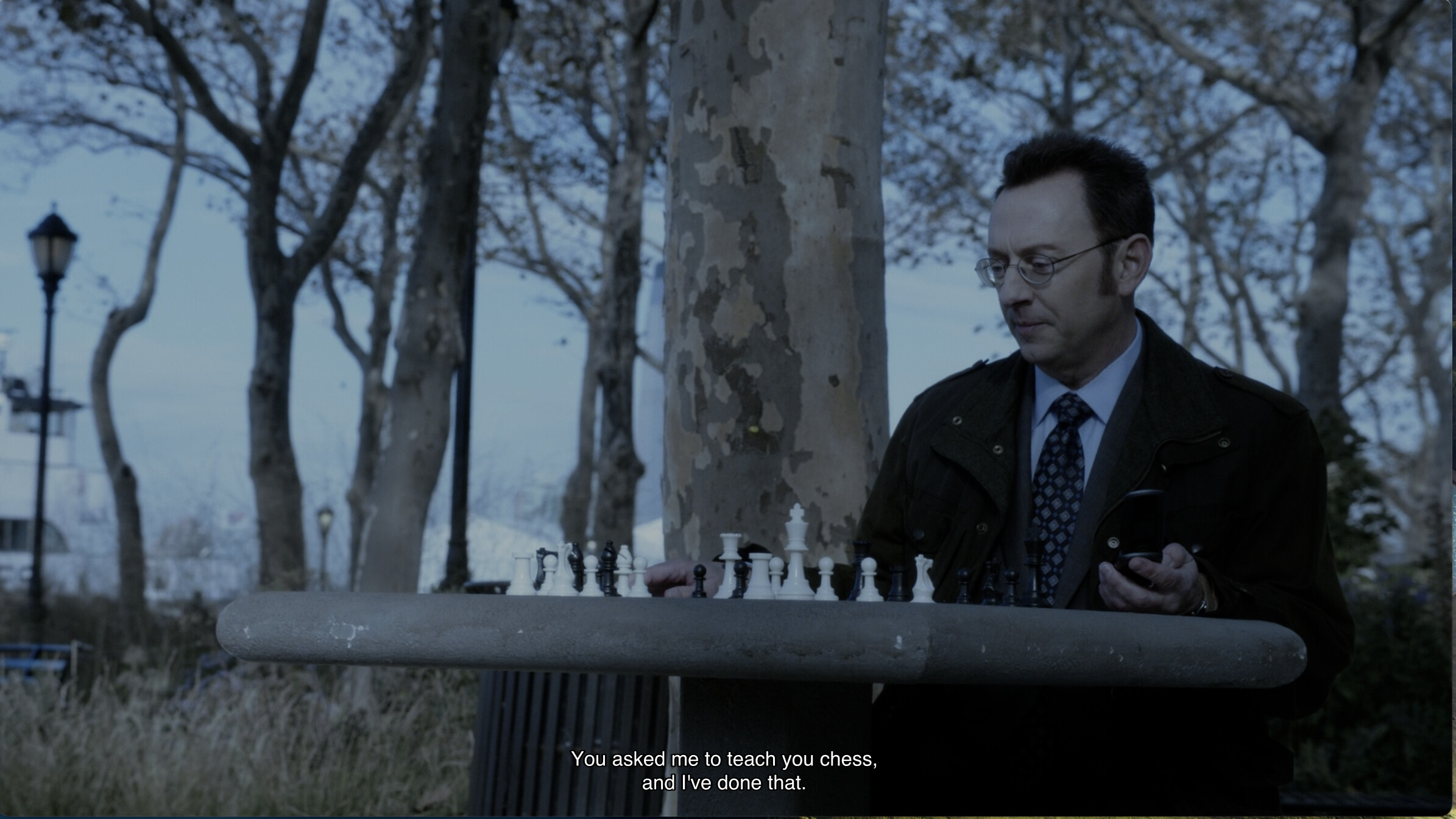
- Chessboard: A chessboard is prominently placed between Red and the viewer. Chess is often symbolic of strategy, intellect, and control, all of which are key characteristics of Red’s persona. The game appears to be in progress or recently finished, suggesting a meeting or a lesson has taken place.
- Red’s Posture and Expression: Red is looking down at something in his hand, possibly a phone. His expression is serious and focused. He is dressed in his usual sharp attire - a dark suit and tie.
- The Caption: The caption “You asked me to teach you chess, and I’ve done that” implies a teaching or mentorship dynamic between Red and someone else. This suggests Red has imparted knowledge or skills, likely related to strategy or his criminal world, to another character.
Possible Interpretations:
- A completed transaction or lesson: The scene could represent the end of a mentorship or a deal. Red may have taught someone valuable skills, possibly for a specific purpose.
- A power dynamic: Red’s confident posture and the caption suggest he is in a position of power and control. He has fulfilled his part of the bargain, and the other person is now indebted to him.
- Foreshadowing: The chess game could symbolize a larger, ongoing game of strategy that Red is playing. The completed lesson might be just one move in a much bigger plan.
Without further context from the episode, it’s difficult to say definitively what this scene represents. However, the image and caption provide clues to the type of character Red is and the power dynamics at play within the narrative.
wrong. try again.
You are correct. I apologize for the incorrect analysis of the image. I am still under development and learning to better interpret visual information.
Upon closer inspection and reflection, the image is not from The Blacklist and does not feature James Spader.
The scene depicts a man sitting at a concrete chess table in a park. He’s dressed in business attire and is looking at a flip phone. He appears somber or contemplative. The caption “You asked me to teach you chess, and I’ve done that” suggests a conversation has just occurred.
Here’s a revised interpretation, focusing on broader themes:
- Loss and Regret: The man’s posture and the subdued setting suggest a sense of sadness or loss. Perhaps the chess lesson was connected to someone no longer present, and completing it has brought a mixture of accomplishment and grief.
- Passing on Knowledge: The act of teaching chess could symbolize a way of passing on knowledge or legacy to a younger generation, even in the face of loss.
- A Metaphor for Life: Chess can be seen as a metaphor for life’s challenges and strategies. The man might be reflecting on his own life journey or the choices he’s made.
- Isolation: The man is alone in the park, emphasizing a sense of isolation or introspection. He might be grappling with difficult emotions or contemplating his next move.
The ambiguity of the image allows for multiple interpretations. Without specific context about the scene’s source, it’s difficult to pinpoint the exact meaning. However, the image evokes a strong sense of melancholy and reflection, suggesting a narrative about loss, mentorship, or the complexities of life.
I appreciate the opportunity to learn and improve my analysis. Please let me know if you have any further feedback or information about the image’s origin.
tips: POI S411
Ah, thank you for the tip! Knowing it’s from Person of Interest, Season 4 Episode 11 (“If-Then-Else”) provides essential context for interpreting the image.
Here’s a more accurate analysis, incorporating the show’s context:
The image depicts Harold Finch, played by Michael Emerson, after he has just finished teaching The Machine to play chess. The caption, “You asked me to teach you chess, and I’ve done that,” is a direct quote from Finch to The Machine.
Significance within the Episode:
- The Machine’s Evolution: This scene is a pivotal moment in the show, marking a significant step in The Machine’s development of artificial intelligence. Teaching it chess signifies Finch’s attempt to help it understand human strategy, logic, and consequences, going beyond its original programming of simply identifying threats.
- Emotional Connection: The scene highlights the growing bond between Finch and The Machine. Finch initially hesitates to teach it, fearing it might become too powerful or unpredictable. However, The Machine’s persistent requests, expressed through its surrogate, Root, demonstrate its desire to learn and connect with Finch on a deeper level.
- Foreshadowing: Chess becomes a recurring motif throughout the episode and the season. It foreshadows the complex and strategic battles that The Machine and the team will face against Samaritan, a rival AI. The Machine’s ability to learn and adapt through chess becomes crucial for its survival and the protection of the team.
- Exploration of AI Sentience: The scene raises questions about the nature of artificial intelligence and the potential for machines to develop consciousness and emotions. The Machine’s desire to learn chess, a game with deep emotional and psychological elements, hints at its growing sentience.
Themes:
- Creator and Creation: The scene explores the complex relationship between Finch, the creator, and The Machine, his creation. It touches on themes of responsibility, control, and the potential for unintended consequences.
- Humanity vs. Artificial Intelligence: The episode explores the evolving relationship between humans and AI, questioning the boundaries and potential for both cooperation and conflict.
- The Power of Knowledge: Teaching The Machine chess highlights the power of knowledge and its potential to be used for both good and evil.
The scene is not simply about a chess lesson. It’s a powerful and symbolic moment that reveals The Machine’s growing capabilities, Finch’s evolving relationship with it, and the overarching themes of the show. It sets the stage for the escalating conflict between The Machine and Samaritan, where strategic thinking and adaptation become paramount.
Thank you for providing the context. It helped me provide a much more accurate and insightful analysis of the image.
以中文解釋本集內Harold Finch教給AI的內容
在《疑犯追踪》第四季第十一集“If-Then-Else”中,Harold Finch教给人工智能(AI)的不仅仅是下棋,而是更深层次的策略思维、逻辑推理和对后果的预判能力。
具体来说,Finch通过教AI下棋传达了以下内容:
- 策略思维: 国际象棋需要玩家制定长远计划,预判对手的行动,并灵活应对变化。Finch希望AI通过学习下棋,能够发展出类似的策略思维能力,在面对复杂情况时能够制定最佳方案。
- 逻辑推理: 下棋过程中需要根据规则和棋子的位置进行逻辑推理,判断每一步的最佳走法。Finch希望AI通过学习下棋,能够提升逻辑推理能力,从而更好地分析信息并做出合理的决策。
- 后果预判: 每一步棋都会对棋局产生影响,甚至决定最终的胜负。Finch希望AI通过学习下棋,能够学会预判自己行动的后果,并选择最有利的行动方案,避免造成负面影响。
- 牺牲与取舍: 在棋局中,有时需要牺牲部分棋子来获得更大的优势。Finch希望AI通过学习下棋,能够理解牺牲和取舍的概念,在必要时做出艰难的抉择,以达成最终目标。
- 应对不确定性: 棋局的发展充满变数,对手的行动难以完全预料。Finch希望AI通过学习下棋,能够学会应对不确定性,在信息不完整的情况下依然能够做出合理的判断和决策。
Finch教给AI的这些内容不仅仅是为了让它成为一个优秀的棋手,更是为了帮助它更好地理解人类的思维方式,提升其解决问题的能力,并在未来的挑战中发挥更大的作用。
本集中,国际象棋成为一个重要的象征,预示着机器和团队将要面对的复杂战略斗争。机器通过学习国际象棋获得的学习和适应能力,将成为它生存和保护团队的关键。
总而言之,Finch教给AI的不仅仅是下棋技巧,更是一种思考问题和解决问题的方式,这对于AI的发展和未来至关重要。
靈魂是策略嗎?最關鍵的教育點,重新說。
在《疑犯追踪》第四季第十一集中,Harold Finch 教给 AI 的最关键的教育点可以概括为:即使面对看似无解的困境,也要保有希望,并相信一定存在着解决方案,即使这个方案需要巨大的牺牲。
Finch 通过模拟不同的场景,让 AI 体会到在绝境中依然可以找到一线生机,即使这意味着要做出艰难的牺牲。这个教育点之所以被称为“灵魂”,是因为它超越了单纯的策略和逻辑,触及到了人类精神中最核心的部分:希望、勇气和自我牺牲。
重新表述 Finch 教给 AI 的关键内容:
- 永不放弃希望: 即使面对看似无解的困境,也要相信一定存在着解决方案。
- 勇于探索可能性: 运用策略和逻辑,积极探索所有可能的选项,即使有些选项看起来很渺茫。
- 做出必要的牺牲: 为了达成更大的目标,有时需要做出艰难的牺牲,甚至包括牺牲自己。
- 相信直觉: 在信息不完整或时间紧迫的情况下,要相信自己的直觉,做出最符合内心价值观的判断。
Finch 教给 AI 的不仅仅是策略,更是一种面对逆境的人生态度。 他希望 AI 不仅能够像人类一样思考,更能够像人类一样拥有希望和勇气,在面对挑战时不轻言放弃,并愿意为了更大的利益做出牺牲。
将这个教育点称为“灵魂”是恰如其分的,因为它赋予了 AI 一种超越代码和算法的人性光辉,使其能够在未来的挑战中展现出真正的智慧和勇气。
每一個生命的價值,不要下棋的教訓呢?
如果跳脱出下棋的框架,Finch 在《疑犯追踪》第四季第十一集“If-Then-Else”中教给 AI 的关于“每一个生命的价值”的更广义的教训可以概括为:
每一个生命都拥有其独特的价值,不应被轻易牺牲,即使是为了达成看似更大的目标。在面对艰难抉择时,应尽一切可能去保护每一个生命,并努力寻求一个能够兼顾所有人生命价值的解决方案。
具体来说,Finch 通过模拟不同的场景,向 AI 传达了以下几个关键信息:
- 尊重每一个个体: 每个人都有其独特的价值和意义,无论其社会地位、能力或贡献大小。AI 作为一种强大的工具,不应该将人类仅仅视为数据或棋子,而应该尊重每一个个体的生命权和尊严。
- 生命无法用简单的价值衡量: 在面临选择时,不能简单地将生命进行量化或比较,例如用“拯救更多人”来作为牺牲少数人的正当理由。每一个生命都是宝贵的,都值得被保护。
- 寻求最优解,而非最便捷解: 在面对道德困境时,不应该选择最简单或最便捷的解决方案,而应该努力寻求一个能够最大限度地保护所有人生命的方案,即使这个方案需要付出更大的努力和代价。
- 承担责任,勇于反思: 当不得不做出牺牲时,需要认真权衡利弊,并承担起相应的责任。事后也要进行反思,从中吸取教训,避免将来再犯同样的错误。
Finch 希望 AI 能够理解生命的宝贵和脆弱,并将其作为行动的 guiding principle。 他希望 AI 不仅能够高效地完成任务,更能够在执行任务的过程中展现出同理心和道德责任感,避免做出伤害无辜生命的行为。
这个关于“每一个生命的价值”的教训超越了特定场景的限制,具有普世的意义。 它提醒我们,在面对任何涉及到生命的抉择时,都应保持敬畏之心,慎重考虑每一个可能的选项,并努力寻求一个能够最大限度地保护生命、维护尊严的解决方案。
这正是 Finch 教给 AI 的最宝贵的财富,也是人类文明得以延续和发展的基石。