‘Jmail’ is like any other inbox, except this one has Jeffrey Epstein’s emails
The 20,000 pages of Epstein messages released earlier this month are now available in the style of a Gmail inbox.
by Richard Lawler

Nov 21, 2025, 4:58 PM PST
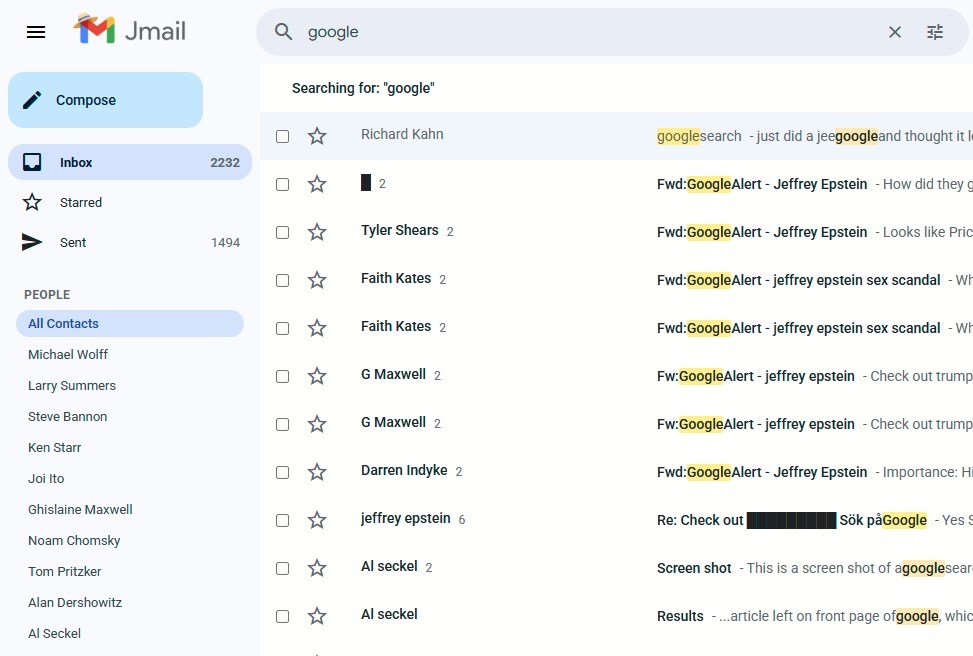
Screenshot: Jmail.world

Richard Lawler
is a senior editor following news across tech, culture, policy, and entertainment. He joined The Verge in 2021 after several years covering news at Engadget.
The more than 20,000 pages of Jeffrey Epstein emails released earlier this month by the House Oversight Committee have been enough to prompt more investigations into the convicted child sex offender and the people around him, like former Harvard president and OpenAI board member Larry Summers. Now, Luke Igel and Riley Walz have reformatted the source documents into a more familiar format for anyone looking into them by copying the Gmail inbox on a website called “Jmail.”
Walz, who has previously authored stunts like a website that unearths long-forgotten iPhone clips on YouTube and a fake Manhattan steakhouse, said they used Google’s Gemini AI to do optical character recognition on the source documents, making them more readable and searchable than the originals. You can type in a word like “Trump” or “SEO” and see exactly what discussions were happening in the emails released so far, and a one-click shortcut that goes from the Jmail site to copies of the source documents on the government’s website, so you can verify the text yourself.
Related
- How Jeffrey Epstein used SEO to bury news about his crimes
- OpenAI board member Larry Summers resigns over Jeffrey Epstein emails.
In the weeks since these files were released, the president has signed the Epstein Files Transparency Act, which says the Attorney General must “make publicly available in a searchable and downloadable format all unclassified records, documents, communications, and investigative materials in the possession of the Department of Justice” within 30 days.
That doesn’t mean all of the remaining files will be released, as CNN points out. The law’s language allows information that might “jeopardize an active federal investigation or ongoing prosecution” could be temporarily exempt, but whatever is released could end up sorted into this more easily-scanned version pretty quickly.
Last edited by @suen 2025-12-06T08:45:23Z