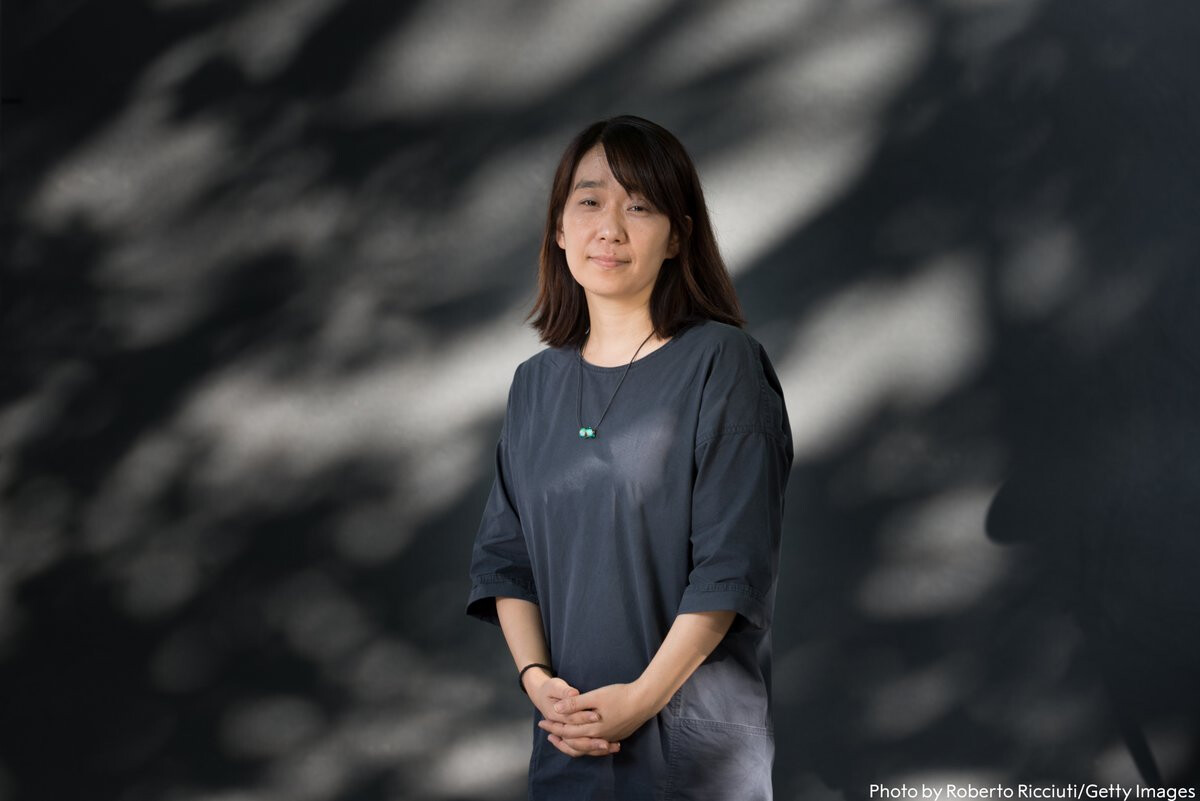
Newly awarded literature laureate Han Kang’s work is characterised by this double exposure of pain, a correspondence between mental and physical torment with close connections to Eastern thinking.
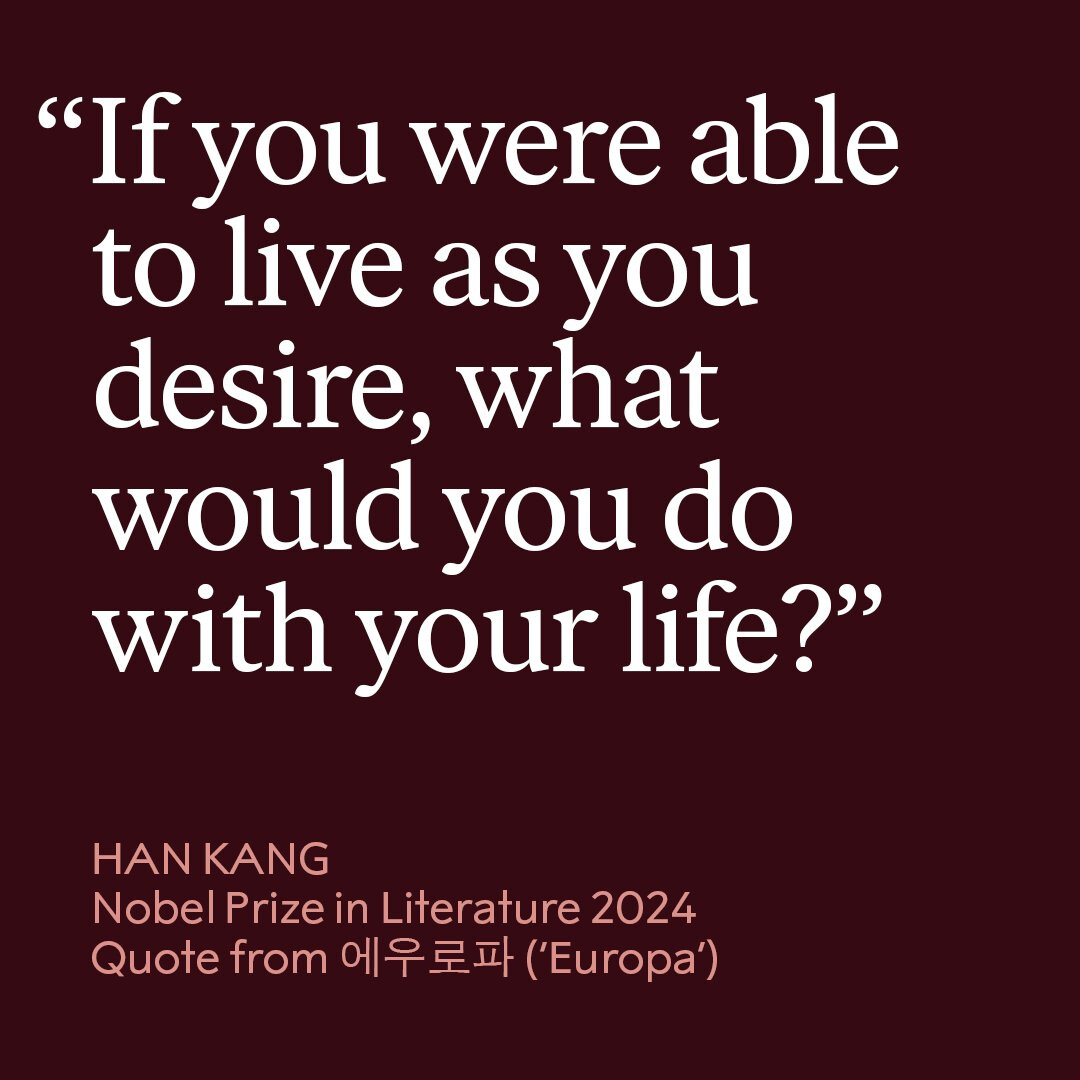
In Han Kang’s short story 에우로파 (2012; ‘Europa’, 2019), the male narrator, himself masked as a woman, is drawn to an enigmatic woman who has broken away from an impossible marriage. The narrative self remains silent when asked by his beloved: “If you were able to live as you desire, what would you do with your life?” There is no room here for either fulfillment or atonement.
In the novel 소년이 온다 (2014; ‘Human Acts’, 2016), Han Kang – awarded this year’s #NobelPrize in Literature – employs as her political foundation a historical event that took place in the city of Gwangju, where she herself grew up and where hundreds of students and unarmed civilians were murdered during a massacre carried out by the South Korean military in 1980. In seeking to give voice to the victims of history, the book confronts this episode with brutal actualisation and, in so doing, approaches the genre of witness literature. Han Kang’s style, as visionary as it is succinct, nevertheless deviates from our expectations of that genre, and it is a particular expedient of hers to permit the souls of the dead to be separated from their bodies, thus allowing them to witness their own annihilation. In certain moments, at the sight of the unidentifiable corpses that cannot be buried, the text harks back to the basic motif of Sophocles’s ‘Antigone’.